Recommended
Assess First
Start with a focused portfolio diagnostic. Map the real AI opportunities — and the traps — company by company before committing capital. Right for funds that want a clear picture before deciding how to move.
 The operating partner for AI in PE portfolios
The Approach
Two phases. A clear sequence. No false starts — because the order matters more than most funds realize.
Why Sequence Matters
They skip straight to the exciting part — the models, the automation, the AI-driven decisions — without building the foundation those things need to run on. The result is exactly what McKinsey described: pilots that work in isolation and never scale, data that can’t be trusted, and an AI initiative that quietly gets deprioritized when the next quarter’s numbers come in.
The sequence system8.ai follows isn’t complicated. But it’s non-negotiable. Phase 1 makes Phase 2 possible. Skipping it doesn’t save time — it guarantees failure.
Phase 1 · Data and Systems
In most portfolio companies, that’s exactly what’s missing. Models built on fragmented, inconsistent, or untrustworthy data produce recommendations that can’t be defended — which means they don’t get implemented — which means the project fails.
Phase 1 fixes that before it becomes a problem.
Most companies are sitting on data they’re not capturing. Operational data, transaction data, customer behavior data — the raw material AI needs to find patterns. Phase 1 starts by making sure the right data is being captured and stored in a form that’s actually usable.
Data engineering, orchestration, infrastructure as code, lineage. The unglamorous work that makes everything else possible. This is where Steve’s background is most directly relevant — he spent 25 years building exactly this kind of infrastructure inside the firms that needed it to work at scale.
Continuous, incremental improvement adapted from Toyota’s manufacturing methodology. Not a big-bang transformation. A disciplined process of gradual refinement that compounds over time — which is how durable operational advantages actually get built.
By the end of Phase 1, your portfolio companies are on a shared, maintainable data foundation. AI has something real to work with. The insights that surface are trustworthy enough to act on.
Phase 2 · Optimize and Automate
Use math and statistical models to improve how decisions get made. Pricing decisions. Lead buying decisions. Inventory decisions. Hiring decisions. The places where a model that’s right 70% of the time outperforms a manager who’s right 55% of the time — and where the difference compounds across hundreds of decisions per year.
Use code to perform repeatable tasks that don’t require human judgment. Not to replace people wholesale — but to free the people you have to focus on the work that actually requires them.
The specific technologies — the model types, the platforms, the tools — are mostly just ways to get to these two outcomes. Don’t get distracted by the label on the box.
The Phase 2 Trap
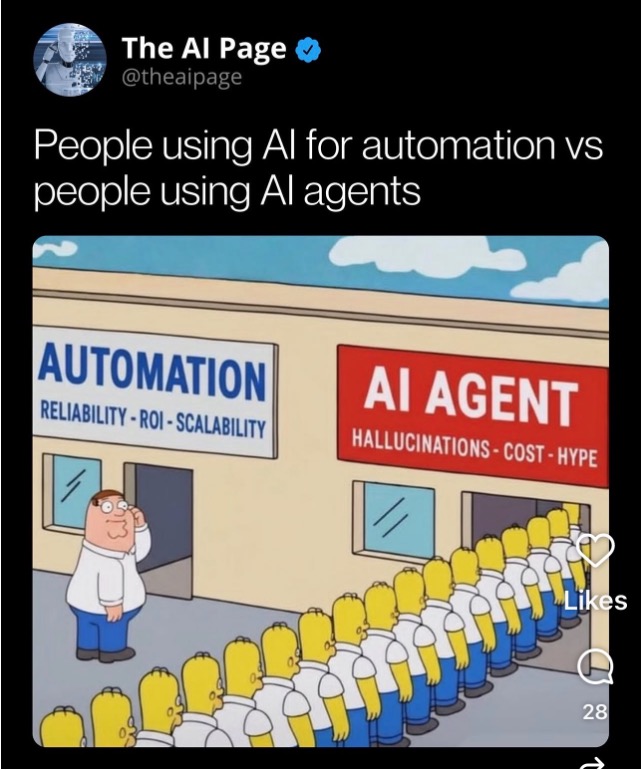
When fund managers and operating partners think about AI automation, the instinct is to map every human role to an AI equivalent. Replace the analyst with an AI analyst. Replace the customer service rep with a chatbot. Clone the workflow, swap in the technology.
It’s the most intuitive framing. It’s also almost always the most expensive, most disruptive, and least effective path.
The wins in Phase 2 don’t come from turning every seat into an agent. They come from rebuilding how decisions get made and how data flows through the organization. That’s a fundamentally different question — and it’s the one most consultants never think to ask.
system8.ai focuses on the high-leverage alternatives first. Where can a model improve a decision that gets made hundreds of times a day? Where can automation eliminate a workflow that exists only because no one built a better one? Those are the questions that move EBITDA.
Three Paths
The right starting point depends on where your fund is today.
Recommended
Start with a focused portfolio diagnostic. Map the real AI opportunities — and the traps — company by company before committing capital. Right for funds that want a clear picture before deciding how to move.
Build & Deploy
Bring in an outside team aligned to fund goals. Share cost and infrastructure across portfolio companies. Move at speed without building everything from scratch internally. Right for funds that are ready to move and want experienced operators leading the work.
Long Horizon
Stand up dedicated AI capability inside the management company itself. Highest ceiling, highest build cost, longest ramp. Right for the largest funds with the appetite and resources to own the capability permanently.
Most founding partners start with Assess First — it’s the lowest-commitment entry point and it produces a clear picture of where to go next.
Your Move
If the sequence makes sense and you want to understand what it looks like inside your specific portfolio, that’s exactly what the first conversation is for.